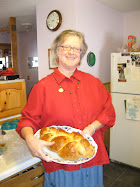
Here we seek a rest in the shade, some cool water and a little kindness. This blog is dedicated to peace, truth, justice and a post- industrial, post-petroleum illumined world in spite of all odds against it. I very much like the line about the ancient knight (see poem below) "His helmet now shall make a hive for bees" It is reminiscent of "beating swords into ploughshares" a sentiment I heartily approve of. Thank you for visiting ~ I hope you return!
11 But Mary stood at the sepulchre without, weeping. Now as she was weeping, she stooped down, and looked into the sepulchre, 12 And she saw two angels in white, sitting, one at the head, and one at the feet, where the body of Jesus had been laid. 13 They say to her: Woman, why weepest thou? She saith to them: Because they have taken away my Lord; and I know not where they have laid him. 14 When she had thus said, she turned herself back, and saw Jesus standing; and she knew not that it was Jesus. 15 Jesus saith to her: Woman, why weepest thou? whom seekest thou? She, thinking it was the gardener, saith to him: Sir, if thou hast taken him hence, tell me where thou hast laid him, and I will take him away. 16 Jesus saith to her: Mary. She turning, saith to him: Rabboni (which is to say, Master). 17 Jesus saith to her: Do not touch me, for I am not yet ascended to my Father. But go to my brethren, and say to them: I ascend to my Father and to your Father, to my God and your God. 18 Mary Magdalen cometh, and telleth the disciples: I have seen the Lord, and these things he said to me.
It is a wonderfully strange scene on the morning of Jesus' resurrection: As sovereign Lord, Jesus keeps Mary Magdalen - out of whom he had cast seven devils - from recognizing him. Thinking him to be the gardener, she tearfully asks where he has taken the body of Jesus. Then the Lord reveals himself by speaking her name in a familiar manner, and at the same time allowing her to recognize him. Naturally, she is overjoyed and embraces him. Then he utters those memorable but puzzling words: Touch me not.
The puzzling part to those who read the narrative in English is, why did he command the Magdalen not to touch him, while a week later he commanded Thomas to do so? Compare the accounts:
26 And after eight days again his disciples were within, and Thomas with them. Jesus cometh, the doors being shut, and stood in the midst, and said: Peace be to you. 27 Then he saith to Thomas: Put in thy finger hither, and see my hands; and bring hither thy hand, and put it into my side; and be not faithless, but believing. 28 Thomas answered, and said to him: My Lord, and my God. 29 Jesus saith to him: Because thou hast seen me, Thomas, thou hast believed: blessed are they that have not seen, and have believed.
The resolution of this seeming discrepancy is very simple when we look at the shades of meaning in the Greek phrase: Μη μου άπτου. Apto means to touch, but also means to embrace and cling to another. It is used in this latter sense in 2 Corinthians 6: 17: 17 Wherefore, Go out from among them, and be ye separate, saith the Lord, and touch not the unclean thing: 18 And I will receive you; and I will be a Father to you; and you shall be my sons and daughters, saith the Lord Almighty. Saint Paul is exhorting us not to embrace or cling to anything in this present world that defiles our soul.
With this in mind it is easy to see what Jesus meant by his words to Mary Magdalen: Do not hold on to me, for I have not yet ascended, etc. As if he would say: We are now reunited in life by my resurrection, but do not attempt to cling to me even in this glorified condition, for I will not be remaining here with you but will soon ascend to my Father. And the great grace I give you, Mary, is to announce these glad tidings to my disciples, who will proclaim it to the world: "I ascend to my Father and your Father; to my God and your God."
On the other hand, with Thomas he invites touch in the sense of tactile investigation of his wounds in order to give infallible proof that he was not merely an apparition, but the same Jesus who had died on the cross now resurrected in a glorious manner. It was fitting to Thomas' office as an apostle, a witness of Jesus risen from the dead. And Thomas' response is that of every true disciple through the ages: "My Lord and my God!"
Most interestingly, these very words of the Apostle Thomas have been incorporated into the Holy Liturgy of the Universal Church, at the very moment when the Body, Blood, Soul and Divinity of Jesus have been made present and we are about to have them touch our lips. In the Latin Rite, after the major elevation, the faithful are instructed to say privately the confession of Saint Thomas as their own response to seeing the Eucharistic Gifts: "My Lord and my God." In the Byzantine Rite we see the priest raise the Holy Discos and Chalice with arms crossed, proclaiming "We offer You Yours of Your own, in behalf of all and for all." And we respond, "We praise You, we bless You, we thank You O Lord, and we pray to You, our God." More poetic, indeed, but still the same adoring confession of the deity of Jesus, risen and ascended, who is in our midst in the Holy Eucharist.
I first heard this wonderful Leonard Cohen song/poem when I was very young, maybe 14 or so. It has always struck me as a potent and true expression of the sacramental nature of the material world, not to be mistaken for animism, but somewhat akin to it - the Catholic sense that God's Magic, His Mystery (mysterion, agape, nous and sophia) trumps all attempts to diminish it, that Christ is indeed rised from the dead and has once and for all trampled down death by His death, and bestows life upon those in the very tombs. Sung by Cree singer-composer Buffy Sainte-Marie.
Lucky, lucky me: as a Byzantine Catholic (that's Orthodox in union with Rome) who is married to a Greek Orthodox convert who is enthusiastic about his religion, I get not one but TWO Easters every year. So Chronia Polla, and Christos Anesti, y'all !!
We are just back from a sweet little barbeque in which the elderly Greek couple, Mimi and Stamatia, hosted about 200 of their closest friends for lamb, souvlaki, hand-patted pita bread, skorthalia (garlic spread),pastitsio (Greek meat/pasta casserole), dolmades, (grape leaves stuffed with meat & spices), feta, olives, baklava, nutcakes which I forgot the Greek name for and a host of other things too varied and numerous to name. This is after staying up until three A.M. at Church for the midnight Easter Liturgy, followed by ~ you guessed it ~ lamb dinner with all the trimmings hosted in the Church basement.
I love shouting out with the congregation that hell was embittered ~ embittered!! ~ when it encountered God in its depths. I love singing Christos Anesti! (Christ is Risen) at the top of my lungs over and over again. And I love being a Byzantine Catholic, dwelling as we do on the narrow and precarious isthmus which unites the body of the Church East and West in harmony and peace.
So Christ Is Risen, ChristosAnesti, (Greek)Christos Voskrege, (Slavic) Alamassee Hoc Hum (Arabic) to everyone. And forgive me if I left your native tongue out, that's all the ways I know to say Christ Is Risen. Happy Greek Easter.
Christos Anesti - Irene Pappas and Vangeli
Opa!!!!
~~~~~~~~~~~~~~~~~~~~~~~~~~~~~~~~~~~~~~~~~~~~~~~~~~~~~~ The Rabbit of Easter. He Bring of the Chocolate And so in honour of resurrection, victory over hell, the grave and death, in honour of freedom, joy, waaay too much delicious food and a joyous spring, I give you David Sedaris. From his book, Me Talk Pretty One Day, which can be bought here.
QUOTE "And what does one do on the fourteenth of July? Does one celebrate Bastille Day?" It was my second month of French class, and the teacher was leading us in an exercise designed to promote the use of one, our latest personal pronoun. "Might one sing on Bastille Day?" she asked. "Might one dance in the streets? Somebody give me an answer." Printed in our textbooks was a list of major holidays accompanied by a scattered arrangement of photographs depicting French people in the act of celebration. The object of the lesson was to match the holiday with the corresponding picture. It was simple enough but seemed an exercise better suited to the use of the pronoun they. I didn't know about the rest of the class but when Bastille Day eventually rolled around, I planned to stay home and clean my oven. Normally, when working from the book, it was my habit to tune out my fellow students and scout ahead, concentrating on the question I'd calculated might fall to me, but this afternoon we were veering from the usual format. Questions were answered on a volunteer basis, and I was able to sit back and relax, confident that the same few students would do most of the talking. Today's discussion was dominated by an Italian nanny, two chatty Poles, and a pouty, plump Moroccan woman who had grown up speaking French and had enrolled in the class hoping to improve her spelling. She'd covered these lessons back in the third grade and took every opportunity to demonstrate her superiority. A question would be asked, and she'd race to give the answer, behaving as though this were a game show and, if quick enough, she might go home with a tropical vacation or a side-by-side refrigerator/freezer. A transfer student, by the end of the first day she'd raised her hand so many times that her shoulder had given out. Now she just leaned back and shouted out the answers, her bronzed arms folded across her chest like some great grammar genie. We'd finished discussing Bastille Day, and the teacher had moved on to Easter, which was represented in our textbooks by a black-and-white photograph of a chocolate bell lying upon a bed of palm fronds. "And what does one do on Easter? Would anyone like to tell us?" It was, for me, another of those holidays I'd just as soon avoid. As a rule, my family had always ignored the Easter celebration by our non-Orthodox friends and neighbors. While the others feasted on their cholocate figurines, my brother, sisters, and I had endured epic fasts, folding our bony fingers in prayer and begging for an end to the monotony that was the Holy Trinity Church. As Greeks, we had our own Easter, which was usually observed anywhere from two to four weeks after what was known in our circle as "the American version." The reason has to do with the moon or the Orthodox calendar -- something mysterious like that -- though our mother always suspected it was scheduled at a later date so that the Greeks could buy their marshmellow chicks and plastic grass at drastically reduced sale prices. "The cheap sons of bitches," she'd say. "If they had their way, we'd be celebrating Christmas in the middle of goddamn February." Because our mother was raised a Protestant, our Easters were a hybrid of the Greek and the American traditions. We recieved baskets of candy until we grew older and the Easter Bunny branched out. Those who smoked would awaken to find a carton of cigarettes and an assortment of disposable lighters, while the others would receive an equivalent, each according to his or her vice. In the evening we had the traditional Greek meal followed by a game in which we would toast one another with blood-colored eggs. The symbolism escapes me, but the holder of the table's one uncracked egg was supposedly rewarded with a year of good luck. I won only once. It was the year my mother died, my apartment got broken into, and I was taken to th emergency room suffering from what the attending physician diagnosed as "house-wife's knee." The Italian nanny was attempting to answer the teacher's latest question when the Moroccan student interrupted, shouting, "Excuse me, but what's an Easter?" It would seem that despite having grown up in a Muslim country, she would have heard it mentioned once or twice, but no. "I mean it," she said. "I have no idea what you people are talking about." The teacher called on the rest of us to explain. The Poles led the charge to the best of their ability. "It is," said one, "a party for the little boy of God who call his self Jesus...oh shit." She faltered and her fellow country-man came to her aid. "He call his self Jesus and then he be die one day on two...morsels of...lumber." The rest of the class jumped in, offering bits of information that would have given the pope an aneurysm. "He die one day and then he go above of my head to live with your father." "He weared of himself the long hair and after he die, the first day he come back here for to say hello to the peoples." "He nice, the Jesus." "He make the good things, and on the Easter we be sad because somebody makes him dead today." Part of the problem had to do with vocabulary. Simple nouns such as cross and resurrection were beyond our grasp, let alone such a complicated refexive phrases as "to give of yourself your only begotten son." Faced with the challenge of explaining the cornerstone of Christianity, we did what any self-respecting group of people might do. We talked about food instead. "Easter is a party for to eat of the lamb," the Italian nanny explained. "One too may eat of the chocolate." "And who brings the chocolate?" the teacher asked. I knew the word, so I raised my hand, saying, "The rabbit of Easter. He bring of the chocolate." "A rabbit?" The teacher, assuming I'd used the wrong word, positioned her index fingers on top of her head, wriggling them as though they were ears. "You mean one of these? A rabbit rabbit?" "Well, sure," I said. "He come in the night when one sleep on bed. Which a hand he have a basket and foods." The teacher sighed and shook her head. As far as she was concerned, I had just explained everything wrong with my country. "No, no," she said. "Here in France the chocolate is brought by a a big bell that flies in from Rome." I called for a time-out. "But how do the bell know where you live?" "Well," she said, "how does a rabbit?" It was a decent point, but at least a rabbit has eyes. That's a start. Rabbits move from place to place, while most bells can only go back and forth -- and they can't even do that on their own power. On top of that, the Easter Bunny has character. He's someone you'd like to meet and shake hands with. A bell has all the personality of a cast-iron skillet. It's like saying that come Christmas, a magic dustpan flies in from the North Pole, led by eight flying cinder blocks. Who wants to stay up all night so they can see a bell? And why fly one in from Rome when they've got more bells than they know what do to with here in Paris? That's the most implausible aspect of the whole story, as there's no way the bells of France would allow a foreign worker to fly in and take their jobs. That Roman bell would be lucky to get work cleaning up after a French bell's dog -- and even then he'd need papers. It just didn't add up. Nothing we said was of any help to the Moroccan student. A dead man with long hair supposedly living with her father, a leg of lamb served with palm fronds and chocolate; equally confused and disgusted, she shrugged her massive shoulders and turned her attention to the comic book she kept hidden beneath her binder. I wondered then if, without the language barrier, my classmates and I could have done a better job making sense of Christianity, an idea that sounds pretty far-fetched to begin with. In communicating any religious belief, the operative word is faith, a concept illustrated by our very presence in that classroom. Why bother struggling with the grammar lessons of a six-year-old if each of us didn't believe that, against all reason, we might eventually improve? If I could hope to one day carry on a fluent conversation, it was a relatively short leap to believing that a rabbit might visit my home in the middle of the night, leaving behind a handful of chocolate kisses and a carton of menthol cigarettes. So why stop there? If I could believe in myself, why not give other improbabilties the benefit of the doubt? I told myself that despite her past behavior, my teacher was a kind and loving person who had only my best interests at heart. I accepted the idea that an omniscient God had cast me in his own image and that he watched over me and guided me from one place to the next. The Virgin Birth, the Ressurrection, and countless miracles -- my heart expanded to encompass all the wonders and possibilities of the universe. A bell, though -- that's f*cked up. UNQUOTE
I am a 57-year old wife, mother and grandmother who currently works as a beadworker, web mistress for my husband's jewelry store/art gallery and CASA volunteer. In my life I have been a seminarian, Protestant minister, professional cook, payroll clerk, hospital orderly, columnist, cook/gardener for a commune in San Francisco in the 1970's and 80's, opthalmalogy paraprofesional, financial advisor (now retired. I held Series 6, 63 and 65 securities licenses, and insurance lines of life, annuities and variable contacts)and was a small business owner from 2003 to 2008 (Calm Eagle Family Financials LLC). Eastern Orthodox Christianity, Eastern Rite and Traditional (Latin Rite)Catholicism, ancient Irish, Buddhist and Native American spiritualities all inform my worldview and spirituality. You will find a kindred spirit here if you value the wisdom of the Holy Spirit and of Mother Earth in equal measure, for they are each other's right and left hands.
~~~Namaste, and peace be with you.
Also known as the herb of grace, and rue, rosemary has deep associations with penance, resurrection, nativity and joy. This blog is dedicated to the spirit of peace, joy and life triumphant. Legend has it that during the flight to Egypt,the Virgin Mary draped her blue cloak over a white flowering rosemary bush to dry. The blooms have been blue ever since to represent Mary’s blue cloak.
Rosemary is known as the "herb of remembrance." It is said that rosemary will grow particularly well in gardens tended by strong-willed women.
The Old Knight
His golden locks time to silver turned; O time too swift, O swiftness never ceasing; His youth 'gainst time and age hath ever spurned, But spurned in vain; youth waneth by increasing; Beauty, strength, youth, are flowers but fading seen; Duty, faith, love are roots, and ever green. His helmet now shall make a hive for bees; And, lovers' sonnets turned to holy psalms, A man-at-arms must now serve on his knees, And feed on prayers, which are age's alms; But though from court to cottage he depart, His saint is sure of his unspotted heart. And when he saddest sits in homely cell, He'll teach his swains this carol for a song; "Blest be the hearts that wish my sovereign well, Curst be the souls that think her any wrong." Goddess, allow this aged man his right, To be your beadsman now, that was your knight. ~ by George Peele